
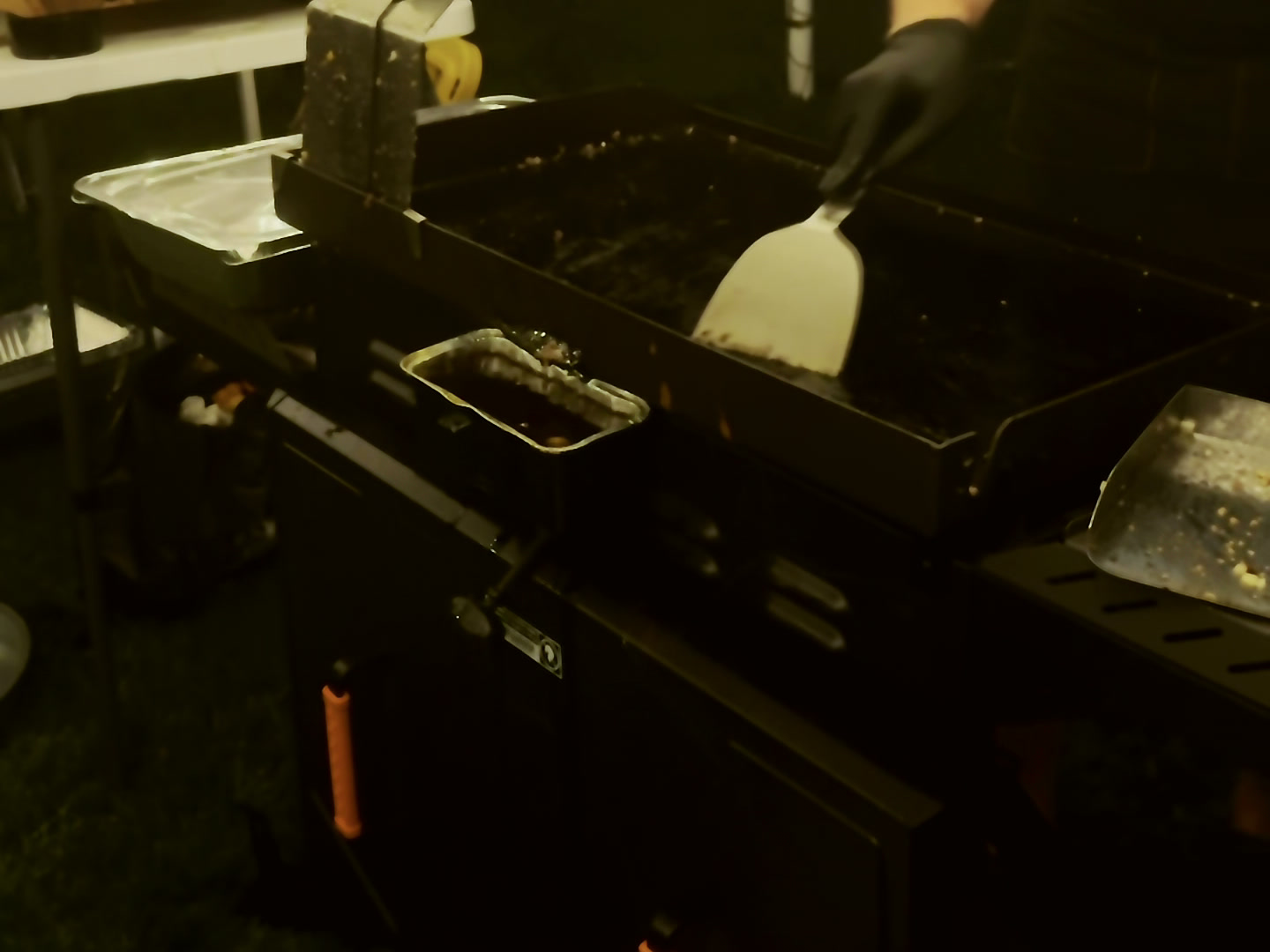
Let me tell you about the night I seasoned my client's dog. Not on purpose. I was cooking a client's event, mid-cleanup under the lights, scraping the griddle down, feeling pretty good about life — and underneath the cooktop, the drip tray was quietly brimming over. It had been collecting grease for cook after cook, and that night it hit capacity and started spilling. The client's dog had stationed himself under the griddle like it was his assigned post — professional beggars know the best seat in the house — directly in the drip line. Didn't move. Didn't flinch. Just stood there getting basted.
No animals were harmed. One was seasoned. And I learned more about drip tray maintenance in that moment than in years of cooking. Here's everything that little tray is actually doing for you — and why it deserves ten seconds of your routine.
What the Drip Tray Actually Does
Every time you scrape your griddle — the water, the oil, the crispy bits, the bacon fat — all of it runs down the grease channel and lands in the drip tray. It's the griddle's catch basin, and it fills faster than you think. A couple of smash burger nights, a bacon breakfast, one hibachi session with the oil flying, and that tray is holding a surprising amount of liquid grease. It does its job silently right up until the moment it can't — and then it does its job all over your patio instead.
Why a Full Tray Is a Real Problem
Overflow is a mess with consequences. Grease doesn't stay where it spills. It sheets across the patio, gets tracked into the house on shoes and paws, stains concrete, and turns your cooking zone into a slip hazard. Ask me how I know about the paws part — on a job, no less.
It's a fire risk. Old pooled grease sitting inches from burners is fuel waiting for a spark. Grease fires don't send a warning text — they happen when a flare-up finds a reservoir. An overflowing tray puts that reservoir exactly where you don't want it.
Rancid grease ruins cooks. Grease that sits for days in warm weather turns. It smokes early, smells off, and that stale smoke kisses everything on the steel. If a cook ever tasted vaguely like the last three cooks combined, a neglected tray is a prime suspect.
It's a critter invitation. Standing grease is a dinner bell — flies, wasps, ants, and bigger nighttime visitors all read it the same way. A clean tray is pest control you don't have to think about.
The 10-Second Habit
Now the tray check lives in my light-up routine, right between "burners on" and "steel heating." It takes ten seconds:
Glance before every cook. If it's more than half full, it gets emptied. No exceptions, no "one more cook won't hurt." One more cook is exactly what hurts.
Line it. A foil liner or a disposable tray liner turns emptying into a five-second lift-and-toss instead of a scraping project. Line it once and future you says thanks every single time.
Keep the channel clear. The tray can only catch what reaches it. A quick scrape of the grease channel when you clean the steel keeps the whole system flowing the right direction — into the tray, not over the edge.
How to Actually Clean It
When the tray does get emptied, give it the full thirty seconds it deserves. Pull it and pour the grease into an old can or jar — never down a sink drain, unless your hobbies include plumbing bills. Let leftover grease solidify and it goes straight in the trash. Then a soak in hot soapy water, a scrub with a scouring pad, and a full dry before it goes back — water sitting in a steel tray is a rust invitation. Once a month or so, check the tray itself for rust spots or warping; a tired tray gets replaced, not nursed.
Signs Yours Is Overdue
You can smell last Tuesday's cook when the burners light. There's a sheen on the patio under the griddle that wasn't there last week. Flies have started attending your cooks uninvited. Your cleanup takes longer than your cook. Or — the definitive sign — your dog smells like bacon and nobody cooked bacon. Check the tray.
📖 Want 50 Recipes You Can Cook Right Now?
Daddio on the Patio: 50 Easy Backyard BBQ & Blackstone Recipes is OUT NOW on Amazon — paperback $21.99, hardcover $27.99, Kindle $17.99. Fifty griddle and backyard recipes, every one with a full-page photo.
Grab Your Copy →Keep the Whole Routine Tight
The drip tray is one part of a cleanup system that takes less time than the cook itself. 👉 How to Clean Your Blackstone After Every Cook — the full scrape, wipe, and oil routine, start to finish. And if your seasoning's seen better days, 👉 How to Season a Blackstone Griddle gets the steel back to nonstick glory.
The Moral of the Story
Griddle cooking is a game of small habits stacked up — season the steel, scrape while it's hot, oil it thin, and check the tray. None of them take a minute. All of them together are the difference between a patio that runs like a kitchen and a patio that seasons your dog. The dog, for the record, seemed absolutely thrilled about the whole thing. Zero regrets. He'd stand there again tomorrow.
Check the tray. Cook the food. Keep the dog a spectator.
Fire. Flavor. Family. 🔥